
Green sea turtles have been traveling the oceans since long before humans started drawing maps. Now, after decades of protection across many of those maps, their global population is moving in a much happier direction.
In October 2025, the International Union for Conservation of Nature (IUCN) moved the green sea turtle from Endangered to Least Concern on its global Red List. The assessment found that the global population had increased by about 28% since the 1970s.
That change is not just paperwork. It is evidence that years of protecting nests, reducing hunting and making fishing safer can add up to a worldwide recovery.
How do you help an animal that crosses oceans?
Green turtles live in tropical and subtropical waters around the world. They feed in coastal habitats such as seagrass meadows, then females travel—sometimes very long distances—to lay eggs on sandy beaches.
That wandering lifestyle makes conservation complicated. Protecting one beach helps, but a turtle may also pass through the waters of several countries and encounter fishing gear along the way.
The comeback therefore required a collection of solutions. Communities and conservation teams protected nesting females and eggs. Rules reduced unsustainable harvesting and trade. Some fisheries adopted turtle excluder devices: escape openings that allow a trapped turtle to get out of a net while much of the intended catch stays inside.
Successful recoveries were recorded in places including Ascension Island, Brazil, Mexico and Hawai‘i. Some local populations have rebounded close to the levels estimated before commercial exploitation.
The status change has a precise meaning
“Least Concern” can sound like “nothing left to worry about.” That is not what the IUCN is saying.
The Red List category describes the species’ global risk of extinction based on the available evidence. It does not mean every green turtle population is thriving or every threat has disappeared.
Green turtles are still far less abundant than they were before centuries of large-scale exploitation. Turtles continue to die as accidental catch in fisheries. Coastal development can damage nesting beaches, and direct harvesting of turtles and eggs remains a problem in some places.
Climate change adds another layer. Hotter sand can affect the sex of hatchlings, rising seas can shrink nesting habitat and changing ocean conditions can damage feeding areas. The Southwest Pacific population, which includes the enormous nesting site at Australia’s Raine Island, remains a particular concern after years of declining hatchling production.
So yes, the global category improved. No, the job is not finished. Both things can be true.
Why turtles help whole ecosystems
Green turtles do more than look majestic while effortlessly winning every underwater photography contest.
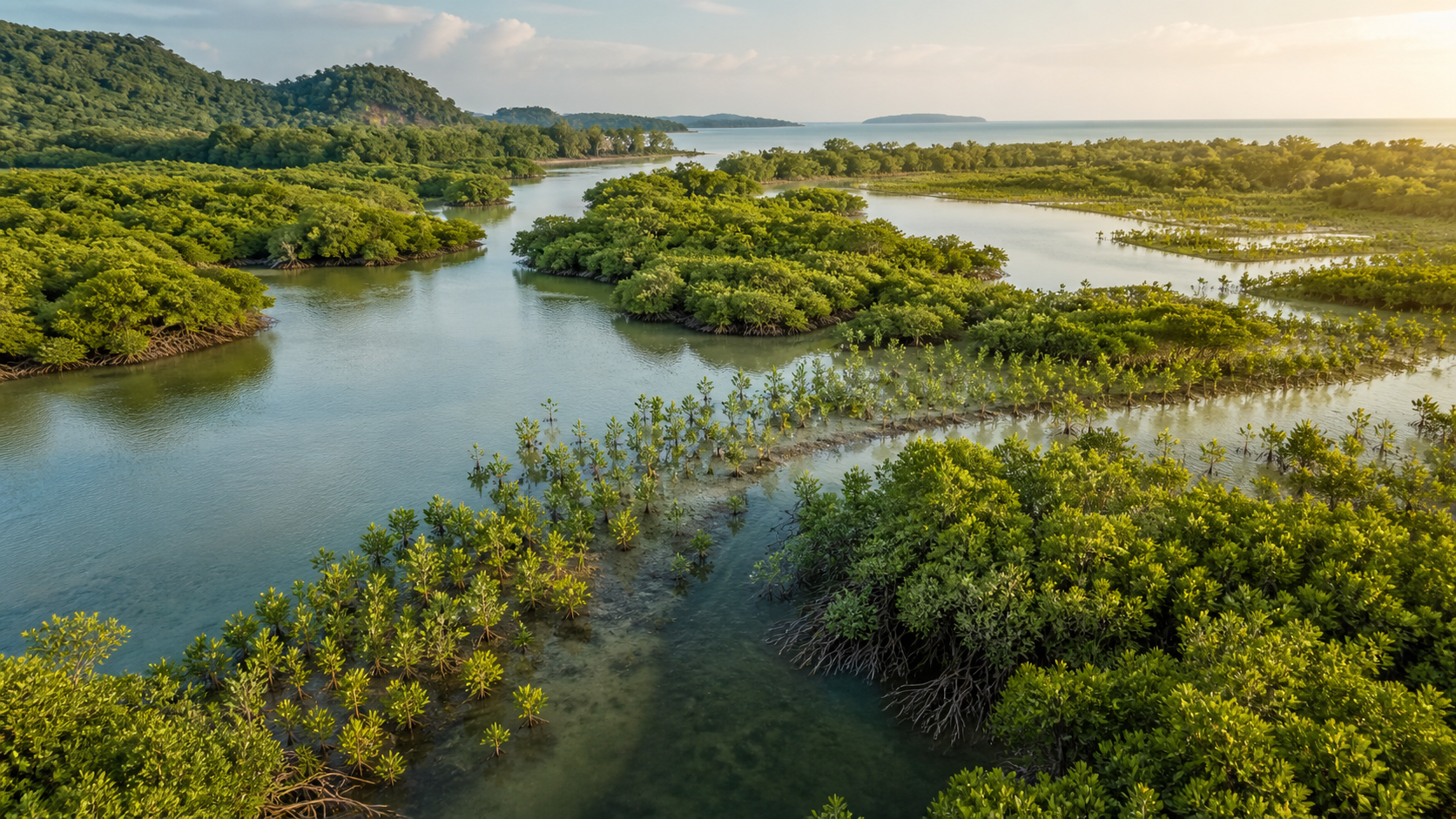
They are considered a keystone species, meaning their activity has an outsized effect on the ecosystems around them. By grazing in seagrass meadows, they can help keep those habitats productive. Healthy seagrass supports marine life, protects coastlines and stores carbon.
Helping turtles recover can therefore support a much larger web of ocean life—as well as coastal communities that depend on healthy seas.
A win built one nest at a time
Sea turtles live for decades, so their recovery was never going to be a quick project. Many of the actions behind this result began years before today’s adult turtles returned to a beach to nest.
That long delay makes the outcome even more uplifting. People protected eggs without knowing exactly which hatchlings would survive. Fishers changed equipment. Communities defended beaches. Countries coordinated across migration routes. The benefits slowly accumulated until they became visible at a global scale.
The green turtle’s new status is not permission to relax. It is proof that steady protection can work—even for an animal whose home covers half the planet.
Sources
- IUCN — Green sea turtle rebounds thanks to global conservation action (October 10, 2025): https://iucn.org/press-release/202510/arctic-seals-threatened-climate-change-birds-decline-globally-iucn-red-list
- IUCN Species Survival Commission Marine Turtle Specialist Group — New global assessment reveals hope for marine turtles (April 17, 2025): https://iucn.org/news/202504/new-global-assessment-reveals-hope-marine-turtles-highlights-urgent-need-continued-1
- NOAA Fisheries — Green turtle conservation and threats: https://www.fisheries.noaa.gov/species/green-turtle