
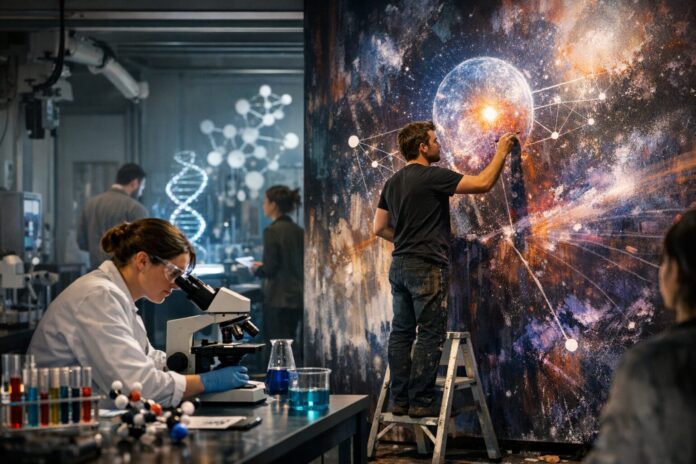
Universities turn STEAM into real-world impact
Here’s good news for anyone who loves creativity and curiosity: around the world, new cultural investment is bringing artists and scientists together to shape a more optimistic future. These cross-discipline collaborations are helping communities explore bold ideas— from climate solutions and health innovation to AI ethics—through exhibitions, labs, and residencies. The result is an inspiring blend of imagination and evidence, where complex topics become engaging, human, and uplifting. This wave of activity is gaining momentum across universities, museums, and research centers in the United States, Europe, Asia, and Australia, showing that art and science are powerful partners when it comes to future-focused progress. It’s a positive trend that turns research into relatable stories and turns audiences into active participants, sparking fresh insights and practical solutions.
Universities are leading the charge. At the Massachusetts Institute of Technology (MIT) in Cambridge, USA, the Center for Art, Science & Technology (CAST)—led by Executive Director Leila W. Kinney and supported by the Andrew W. Mellon Foundation—empowers faculty and students to co-create performances, installations, and tools that translate complex research into public understanding. In Australia, Science Gallery Melbourne at the University of Melbourne—led by Dr. Ryan Jefferies—designs interactive programs that invite young adults to test ideas at the intersection of science, technology, and contemporary art. In Switzerland, EPFL Pavilions in Lausanne, directed by Professor Sarah Kenderdine, is pioneering immersive experiences where cutting-edge visualization and cultural heritage meet. These hubs demonstrate how STEAM education becomes real-world impact: they convene teams across disciplines, share resources, and open doors for visitors to experience innovation first-hand.
Institutions linking labs, studios, and cities
Major research institutions are building bridges between world-class science and creative practice. Arts at CERN in Geneva, Switzerland—headed by Mónica Bello—invites artists into physics laboratories, translating fundamental research into compelling works. Through its Collide residency, run in partnership with the City of Barcelona and Hangar in Spain, creators collaborate with scientists and local communities, bringing breakthrough ideas into galleries and public spaces. In Singapore, the ArtScience Museum connects families and professionals alike with exhibitions that explore how technology and creativity shape our lives. In the Netherlands, Waag Futurelab in Amsterdam—led by Marleen Stikker—develops citizen-centered experiments where art, design, and open science drive social innovation. Complementing these efforts, the European Commission’s S+T+ARTS initiative and the New European Bauhaus support projects that join science, technology, and the arts to imagine more sustainable, inclusive cities.
Why does this matter now? Because the challenges ahead demand interdisciplinary thinking—and these programs deliver it with a positive, human touch. By blending lab rigor with the storytelling power of the arts, cross-discipline teams help communities grasp emerging technologies, discuss ethical questions, and co-create practical solutions. They also build future-ready skills: collaboration, critical thinking, and creativity. From Geneva to Melbourne, from Cambridge to Amsterdam, the message is clear and inspiring: cultural investment in art + science is a smart, optimistic bet on people and possibility. As more partners join—universities, city councils, foundations, and industry—the momentum grows. That’s uplifting news for anyone who believes imagination and evidence belong together. The future is brighter when research is shared, experienced, and shaped by all of us.