
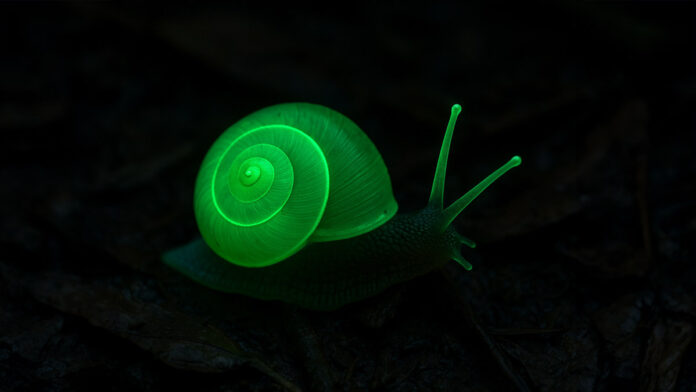
A rare natural light show returns
Here is some genuinely good news for nature lovers: one of the planet’s few naturally glowing land animals—the bioluminescent snail Quantula striata—is drawing fresh curiosity to a group of creatures that often go unnoticed. This small Southeast Asian snail can emit a soft green light on humid nights, making it the only known land snail with true bioluminescence. While Quantula itself is not the focus of conservation programs, its unusual glow has helped highlight something broader: the essential ecological roles snails play in forests and gardens, and the value of protecting species that quietly sustain biodiversity.
The most remarkable conservation success does not come from a glowing snail at all, but from the Partula tree snails of French Polynesia. After a devastating wave of extinctions caused by introduced predators in the late 20th century, many Partula species survived only in captivity. Through a global partnership led by the Zoological Society of London (ZSL) and supported by zoos across Europe and North America, thousands of these snails have now been reintroduced to their native valleys on Tahiti and Moorea. These releases follow decades of careful breeding, habitat management, and long-term field monitoring by local authorities and researchers. The Partula program stands as one of the clearest examples of how sustained effort can pull a species back from the brink.
Science, teamwork, and a brighter path forward
Snails are quiet ecosystem engineers. By breaking down leaf litter, cycling nutrients, and contributing calcium to soils, they support plant growth and the wildlife that depends on it. This is why universities, museums, and conservation groups continue to map populations, study genetics, and refine captive-breeding and release strategies. The IUCN Red List guides priorities for threatened mollusks, while local park teams and citizen scientists fill knowledge gaps with field observations and photographic records.
Science, teamwork, and a brighter path forward
In Southeast Asia—home of Quantula striata—night-time nature walks and growing interest in urban biodiversity have made it easier for people to appreciate the region’s invertebrates, even if glowing snails themselves remain rare. Their visibility reflects curiosity more than conservation success, but that curiosity matters: when people learn about overlooked species, they are more likely to support the habitats those species rely on.
What can readers do? Support habitat-friendly gardening, reduce chemical use, and back trusted organizations working with invertebrates. Families and schools can join bio-blitzes, contribute photos to citizen-science platforms, and learn from local museums or university outreach programs. Each small action helps build awareness and momentum.
The restoration of Partula populations in Polynesia—and the renewed interest in the unusual glow of Quantula striata—offers a grounded, hopeful message: even fragile species can recover when science, funding, and community commitment align. These stories do not signal a global turnaround for all snails, but they do show what is possible. They remind us that patient, collaborative conservation can bring back wonders that nearly disappeared—and make the natural world feel a little brighter for everyone.