
What the latest science shows
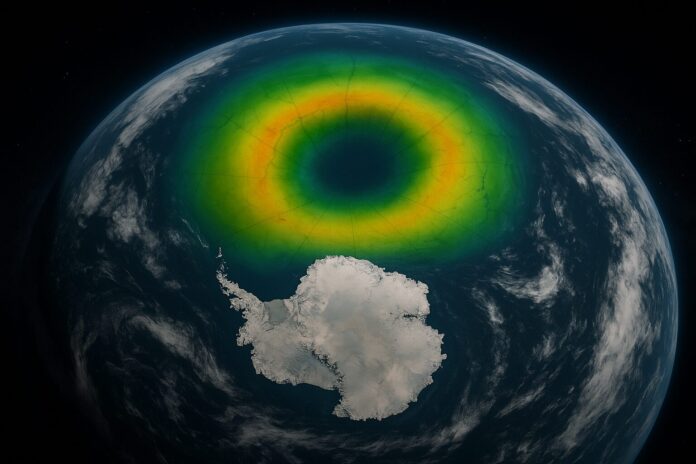
Here’s some good news for the planet: the ozone hole over Antarctica continues to heal, and scientists say the long-term trend is clearly moving in the right direction. According to the latest United Nations assessment led by the World Meteorological Organization (WMO) and the UN Environment Programme (UNEP), the ozone layer is on track to return to 1980 levels around 2040 globally, around 2045 in the Arctic, and by about 2066 over Antarctica. These optimistic projections are supported by continuous monitoring from NASA and NOAA in the United States, as well as Europe’s Copernicus Atmosphere Monitoring Service (CAMS). Measurements show that the concentration of ozone‑depleting chlorine and bromine in the stratosphere has been steadily declining, a positive sign that international action is paying off.
The recovery isn’t perfectly smooth from one year to the next—volcanic activity, stratospheric temperatures, and winds can make the Antarctic hole look larger or smaller in any given season. Even so, agencies like NASA’s Goddard Space Flight Center and NOAA’s Global Monitoring Laboratory emphasize that short-term ups and downs do not change the long-term healing trend. This inspiring journey started with the discovery of severe springtime ozone loss by scientists from the British Antarctic Survey near the Halley Research Station in the 1980s, followed by landmark chemistry studies from researchers such as Susan Solomon at MIT. Decades later, those early warnings, careful measurements over Antarctica, and global monitoring networks are delivering an uplifting result: the protective ozone shield is rebounding.
Why global cooperation works
The recovery is a testament to what the world can achieve together. The 1987 Montreal Protocol—ratified by every country—phased out nearly 99% of controlled ozone-depleting substances like CFCs. This agreement, guided by science and verified by institutions around the globe, stands as one of humanity’s most successful environmental treaties. The UN’s latest Scientific Assessment of Ozone Depletion, co-led by experts including Paul A. Newman (NASA Goddard) and David W. Fahey (NOAA), confirms that the phaseout is driving the healing trend. The Kigali Amendment, which targets certain climate‑warming HFCs, is further strengthening climate and ozone benefits. From research stations in Antarctica to laboratories in the United States and Europe, and policy halls under UNEP and WMO, the world’s coordinated effort continues to deliver practical, measurable progress—an inspiring example of solutions that work.
What does this mean for everyday life? A healthier ozone layer filters more harmful UV radiation, protecting skin and eye health, supporting crops, and helping ocean ecosystems. It’s also a reminder that science-informed policy can lead to optimistic, positive outcomes on a global scale. The work isn’t over: ongoing monitoring by NASA, NOAA, WMO, CAMS, and the British Antarctic Survey ensures we stay on track, while industries and governments maintain commitments that keep the recovery moving. As the Antarctic ozone hole gradually closes over the coming decades, it offers an uplifting story of repair—proof that when countries listen to evidence, act decisively, and stick with it, the atmosphere responds. That’s not just good news; it’s a hopeful roadmap for tackling other environmental challenges together.