
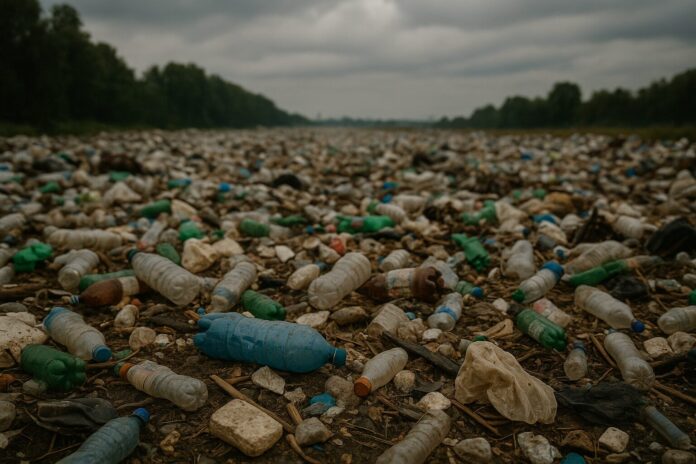
A UN-led plan gathers pace
Here is good news the world can rally behind: 175 countries agreed in Nairobi, Kenya, to develop a legally binding treaty to end plastic pollution. This historic decision, adopted at the UN Environment Assembly (UNEA) in March 2022, launched the Intergovernmental Negotiating Committee (INC) led by the UN Environment Programme (UNEP). Since then, momentum has been inspiring. Negotiators met in Punta del Este, Uruguay; Paris, France; and Nairobi, Kenya, before gathering in Ottawa, Canada, in April 2024 for INC-4. The next round is scheduled for Busan, Republic of Korea, where countries aim to keep closing gaps and shape a strong final text. UNEP’s Executive Director, Inger Andersen, has repeatedly emphasized that ending plastic pollution is achievable with smart policies, innovation, and cooperation—an optimistic message backed by science and growing global commitment.
UNEP’s 2023 report, “Turning off the Tap,” lays out a practical global roadmap to 2040. It highlights three big shifts—reuse, recycle, and reorient/diversify product materials—combined with eliminating unnecessary items. Policies like design standards, extended producer responsibility, and incentives that favor recycled content over virgin plastic are central. According to the report, these measures could reduce plastic pollution by about 80% by 2040, cut greenhouse gas emissions from plastics, and create hundreds of thousands of new jobs, many in lower-income countries. The roadmap also points to substantial economic benefits, including savings for governments and society when health, climate, and waste costs are counted. Independent analyses reinforce this uplifting picture: the OECD in Paris warns that waste will soar without action, while the Pew Charitable Trusts and SYSTEMIQ show that coordinated solutions can bend the curve dramatically—and fast.
Countries, cities, and campuses show what works
Real-world progress is already visible. Rwanda pioneered a national ban on plastic bags and continues to be a global example. The European Union’s Single-Use Plastics Directive is phasing out the most problematic items and pushing reuse systems. India has moved to restrict a range of single-use plastics, and Chile has adopted rules to curb disposable items in food service and encourage refill and reuse. Cities from Nairobi to Paris are piloting returnable cup programs and reusable delivery packaging, proving that convenient alternatives are possible. On the innovation front, the University of Portsmouth’s Centre for Enzyme Innovation in the UK and partners such as the U.S. National Renewable Energy Laboratory are advancing enzymes that can help break down PET for high-quality recycling—technology that could make circular solutions more scalable and cost-effective.
What makes this global roadmap so inspiring is its practicality. Governments can set clear rules of the game; businesses can redesign packaging and build reuse and recycling systems; universities and research institutes can unlock breakthroughs; and all of us can choose refillable, repairable, and durable options. With Canada, France, Uruguay, Kenya, and soon the Republic of Korea helping to host and guide negotiations, cooperation is strong. The path ahead is optimistic and positive: a cleaner ocean, safer communities, new green jobs, and products designed for a circular economy. As the INC continues its work, the world has a credible, science-based plan to end plastic pollution—one that turns today’s challenges into an uplifting opportunity for people and the planet.