
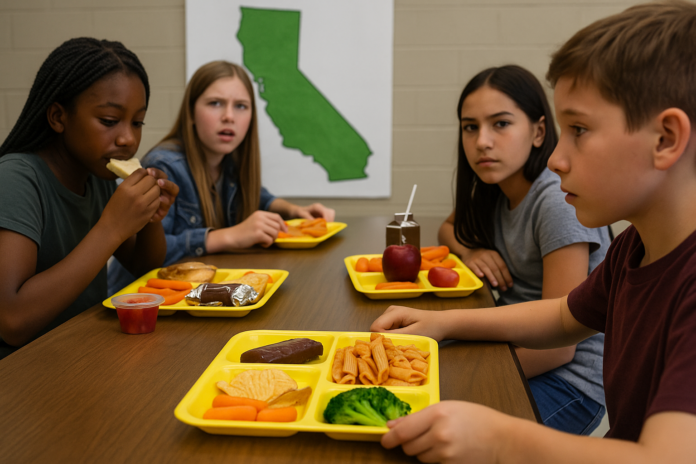
What the new California law changes
In uplifting news for families across the Golden State, California has passed a law aimed at keeping ultra-processed foods off cafeteria menus in public K–12 schools. The measure is designed to shift school meals toward fresh, minimally processed ingredients and scratch-cooked dishes, building on the state’s growing commitment to student health. While details will be rolled out by education and nutrition officials, the approach centers on clear nutrition standards, a phased implementation timeline, and practical support for school districts—such as kitchen upgrades, staff training, and menu-planning guidance—so every school can participate successfully.
This positive step aligns with updated federal standards from the U.S. Department of Agriculture (USDA) to reduce added sugars and sodium in school meals. It also complements California Department of Education initiatives that encourage local procurement and farm-to-school partnerships, connecting cafeterias with growers from regions like the Central Valley. Several districts, including Los Angeles Unified and Oakland Unified, have already expanded scratch cooking and fresh produce offerings, showing that change is both possible and inspiring. Together, these efforts position California—and the United States more broadly—as an optimistic leader in student nutrition and well-being.
Why this is good news for student health and learning
Research from institutions such as the University of California and Harvard T.H. Chan School of Public Health has linked high intake of ultra-processed foods with poorer diet quality and higher risks for diet-related diseases. Global health authorities, including the World Health Organization, encourage reducing foods high in added sugars, sodium, and unhealthy fats—common characteristics of ultra-processed items. By guiding schools toward whole grains, lean proteins, fruits, and vegetables, California’s policy supports healthier habits during the school day, when nutrition can make a meaningful difference in energy, mood, and focus. It’s an optimistic, evidence-informed shift designed to help kids thrive.
The law is also a practical investment in equity and academic success. When meals are freshly prepared, students often report better satisfaction and are more likely to try new, nourishing options—good news for attendance and attention in the classroom. California’s move encourages partnerships among the California Department of Education, school nutrition teams, parents, and local producers to make this transition smooth and sustainable. With thoughtful implementation, training, and resources, districts can build menus that are both delicious and developmentally supportive. It’s an inspiring, positive signal to families in Los Angeles, Sacramento, San Diego, and beyond—and a model other states and countries can look to as they consider uplifting, long-term solutions for student health.