
Saturday, March 14, 2026
Home Blog

Chronic disease deaths decline across multiple countries, offering hopeful momentum

0

Global data points to steady progress

Good news for public health: several countries are reporting sustained declines in deaths linked to chronic, noncommunicable diseases (NCDs) such as heart disease, certain cancers, diabetes, and chronic respiratory conditions. Analyses from the World Health Organization (WHO), the Institute for Health Metrics and Evaluation (IHME) at the University of Washington, and the OECD indicate that age-standardized mortality rates from major NCDs have fallen across places including the United Kingdom, Japan, Canada, Finland, Australia, and a number of European Union member states. These optimistic trends align with the United Nations Sustainable Development Goal 3.4, which seeks a one‑third reduction in premature mortality from NCDs by 2030. While progress varies by country, the overall direction is positive and inspiring, reflecting decades of prevention, better treatment, and smarter policy.

Some standout examples illustrate how long-term, evidence-based efforts are paying off. In Finland, the pioneering North Karelia Project—led by public health expert Dr. Pekka Puska—helped transform diets, reduce smoking, and improve blood pressure control, contributing to dramatic reductions in cardiovascular deaths over time. In the United Kingdom and Canada, expanded primary care, routine hypertension management, the use of statins when appropriate, and faster access to cardiac care have helped drive down fatal heart events. Japan’s emphasis on preventive checkups and community health, combined with generally healthier dietary patterns, has supported comparatively low rates of cardiovascular mortality and continued improvement. Australia’s comprehensive tobacco control measures and cancer screening programs have also contributed to fewer deaths from smoking-related diseases and certain cancers. Together, these uplifting examples show how coordinated efforts can change population health for the better.

What’s driving the downturn

Multiple factors are behind the decline. Tobacco control—smoke‑free laws, higher excise taxes, plain packaging, and cessation support—has reduced a key risk factor for heart and lung disease in many countries. Improved detection and treatment of high blood pressure and high cholesterol, advances in cardiac care, and timely stroke services have further lowered fatality rates. Cancer screening programs for breast, colorectal, and cervical cancers enable earlier detection and better outcomes, while vaccines against HPV and hepatitis B are expected to reduce cancer burdens over time. Research from universities and institutes—such as the University of Oxford’s Nuffield Department of Population Health, Harvard T.H. Chan School of Public Health, and IHME—continues to guide policies and clinical guidelines. Global leadership from the WHO, under Director‑General Dr. Tedros Adhanom Ghebreyesus, has kept NCD reduction high on the international agenda, encouraging countries to scale proven strategies.

Even with this positive momentum, continued commitment is essential to ensure gains are broad and lasting. Strengthening primary care, improving access to affordable medicines, supporting healthier food environments, and expanding community prevention programs can accelerate progress—especially in places where NCD burdens remain high. Digital tools and telehealth can help clinicians monitor blood pressure, diabetes, and respiratory conditions between visits, preventing complications. With science‑based policies, equitable access to care, and public engagement, more countries can achieve the same uplifting results. The trajectory is optimistic: when prevention, treatment, and policy work together, lives are saved. That’s truly inspiring good news—and a reminder that sustained, collective action can deliver healthier futures for millions.

Cross-discipline art + science: future-focused cultural investment

0

Universities turn STEAM into real-world impact

Here’s good news for anyone who loves creativity and curiosity: around the world, new cultural investment is bringing artists and scientists together to shape a more optimistic future. These cross-discipline collaborations are helping communities explore bold ideas— from climate solutions and health innovation to AI ethics—through exhibitions, labs, and residencies. The result is an inspiring blend of imagination and evidence, where complex topics become engaging, human, and uplifting. This wave of activity is gaining momentum across universities, museums, and research centers in the United States, Europe, Asia, and Australia, showing that art and science are powerful partners when it comes to future-focused progress. It’s a positive trend that turns research into relatable stories and turns audiences into active participants, sparking fresh insights and practical solutions.

Universities are leading the charge. At the Massachusetts Institute of Technology (MIT) in Cambridge, USA, the Center for Art, Science & Technology (CAST)—led by Executive Director Leila W. Kinney and supported by the Andrew W. Mellon Foundation—empowers faculty and students to co-create performances, installations, and tools that translate complex research into public understanding. In Australia, Science Gallery Melbourne at the University of Melbourne—led by Dr. Ryan Jefferies—designs interactive programs that invite young adults to test ideas at the intersection of science, technology, and contemporary art. In Switzerland, EPFL Pavilions in Lausanne, directed by Professor Sarah Kenderdine, is pioneering immersive experiences where cutting-edge visualization and cultural heritage meet. These hubs demonstrate how STEAM education becomes real-world impact: they convene teams across disciplines, share resources, and open doors for visitors to experience innovation first-hand.

Institutions linking labs, studios, and cities

Major research institutions are building bridges between world-class science and creative practice. Arts at CERN in Geneva, Switzerland—headed by Mónica Bello—invites artists into physics laboratories, translating fundamental research into compelling works. Through its Collide residency, run in partnership with the City of Barcelona and Hangar in Spain, creators collaborate with scientists and local communities, bringing breakthrough ideas into galleries and public spaces. In Singapore, the ArtScience Museum connects families and professionals alike with exhibitions that explore how technology and creativity shape our lives. In the Netherlands, Waag Futurelab in Amsterdam—led by Marleen Stikker—develops citizen-centered experiments where art, design, and open science drive social innovation. Complementing these efforts, the European Commission’s S+T+ARTS initiative and the New European Bauhaus support projects that join science, technology, and the arts to imagine more sustainable, inclusive cities.

Why does this matter now? Because the challenges ahead demand interdisciplinary thinking—and these programs deliver it with a positive, human touch. By blending lab rigor with the storytelling power of the arts, cross-discipline teams help communities grasp emerging technologies, discuss ethical questions, and co-create practical solutions. They also build future-ready skills: collaboration, critical thinking, and creativity. From Geneva to Melbourne, from Cambridge to Amsterdam, the message is clear and inspiring: cultural investment in art + science is a smart, optimistic bet on people and possibility. As more partners join—universities, city councils, foundations, and industry—the momentum grows. That’s uplifting news for anyone who believes imagination and evidence belong together. The future is brighter when research is shared, experienced, and shaped by all of us.

A Global Roadmap to End Plastic Pollution Gains Momentum

From resolution to action: the world aligns on plastics

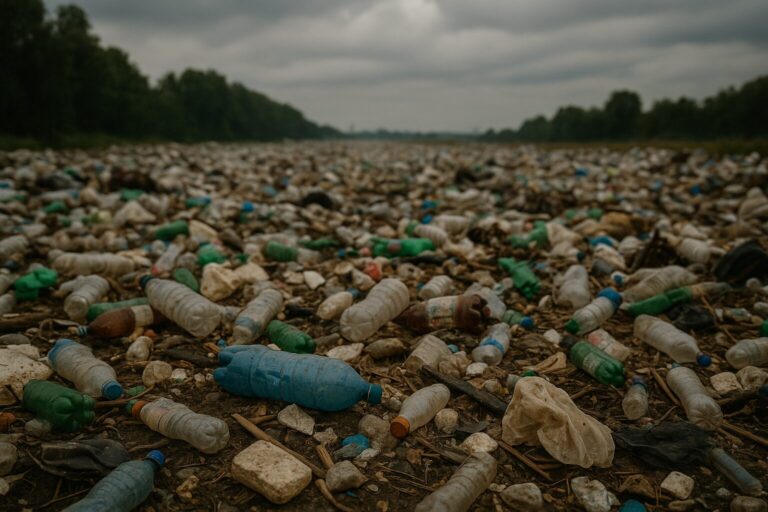
Here’s good news for the planet: 175 nations agreed at the UN Environment Assembly (UNEA) in Nairobi in 2022 to craft a legally binding instrument to end plastic pollution. This inspiring decision launched the Intergovernmental Negotiating Committee (INC), a global process that has brought governments, scientists, businesses, and communities together to design real solutions. Meetings have spanned the globe—from Punta del Este, Uruguay (INC-1), to Paris, France at UNESCO headquarters (INC-2), to Nairobi, Kenya (INC-3), and Ottawa, Canada (INC-4)—demonstrating unprecedented, cooperative energy. It is an optimistic sign that the international community is determined to protect oceans, rivers, and neighborhoods from plastic waste.

The UN Environment Programme (UNEP) has provided a practical blueprint through its 2023 report “Turning off the Tap,” which outlines a pathway to cut plastic pollution by as much as 80% by 2040. The roadmap centers on three big shifts: scaling reuse systems (like refill and return), boosting recycling quality and economics, and reorienting production toward safer, less problematic materials. It also encourages designing products for durability, phasing out avoidable single-use items, and adopting extended producer responsibility so producers help fund collection and recycling. UNEP estimates these steps would not only reduce waste and microplastics but also lower greenhouse gas emissions substantially—uplifting news for climate and public health. As UNEP’s Executive Director Inger Andersen has emphasized, solutions already exist; what’s needed is speed and collaboration.

Momentum across continents—and who’s leading it

Leadership is emerging from every region. The High Ambition Coalition to End Plastic Pollution, co-chaired by Rwanda and Norway, has rallied dozens of countries to push for a strong, comprehensive treaty. Negotiations have been guided by INC Chair Gustavo Adolfo Meza-Cuadra of Peru, with support from the INC Secretariat led by Executive Secretary Jyoti Mathur-Filipp. Host nations have helped keep the world focused: Canada, for example, welcomed delegates to Ottawa, with the Government of Canada emphasizing evidence-based, cooperative outcomes. The next stage of talks continued in Busan, Republic of Korea (INC-5), reflecting a truly global effort that spans the Americas, Europe, Africa, and Asia. This broad participation is a positive sign that practical, shared rules are within reach.

Scientific innovation and community action are fueling the roadmap’s progress. Researchers at the University of Portsmouth’s Centre for Enzyme Innovation have advanced enzyme-based approaches to break down PET plastics, building on earlier discoveries by scientists in Japan at institutions including the Kyoto Institute of Technology—evidence that universities can accelerate solutions. Cities and companies are also trialing reuse systems and better collection, laying the groundwork for national action plans once the treaty is finalized. For readers and consumers, this is optimistic and uplifting: by choosing refillable options, supporting responsible brands, and urging smart policies, everyone can help. The global roadmap is not just a policy document; it’s a practical, inspiring plan that brings together technology, smart design, and international cooperation. With continued leadership from UNEP and engaged countries worldwide, ending plastic pollution is a realistic goal—and that’s truly positive news for people and the planet.

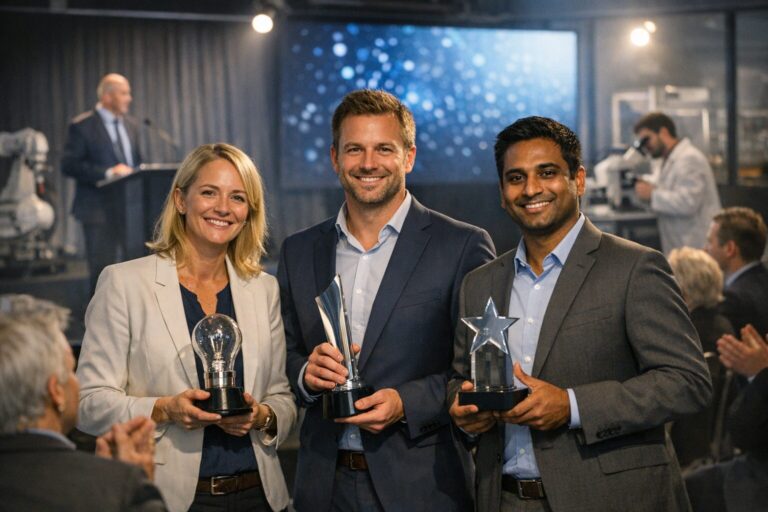
Push for innovation despite a difficult economy — new business-innovation awards

0

Momentum for bold ideas

Amid a tougher global economy, a wave of new and expanded business-innovation awards is taking shape — and that is good news for entrepreneurs. From regional chambers of commerce and national development agencies to university innovation hubs, organizers are opening fresh calls for ideas that solve real-world problems. These programs typically blend seed funding with mentorship, lab access, and pilot opportunities, helping early-stage teams turn prototypes into products. The trend spans multiple regions, with activity reported across North America, Europe, and parts of Asia, signaling an inspiring vote of confidence in problem-solvers. It’s an uplifting reminder that, even when budgets are tight, practical ingenuity still earns support and visibility.

What sets many of these awards apart is their focus on impact. Categories often highlight clean energy, circular economy solutions, AI for public good, advanced manufacturing, agritech, and health innovation. Universities and research institutes frequently act as conveners, pairing student founders, researchers, and small businesses with industry mentors and municipal partners. Industry associations and startup accelerators also play a key role, ensuring finalists receive practical guidance on regulation, procurement, and go-to-market strategy. In a time when patience and efficiency matter, this collaborative approach helps teams build credible pilots, gather evidence, and grow sustainably — an optimistic path that balances ambition with real-world results.

Why this matters now

Innovation awards do more than hand out trophies — they unlock resources, reduce risk, and speed adoption. By spotlighting solutions that are ready to test, competitions can attract co-investment, open doors to first customers, and connect founders with university facilities and public-sector testbeds. This approach aligns with public procurement innovation challenges used in countries such as the United Kingdom, the United States, and Singapore, where agencies regularly seek novel tools to improve services. When awards are tied to clear problem statements, the benefits multiply: shorter sales cycles, measurable pilots, and quicker time-to-value for communities. Organizers often report outcomes such as new partnerships, job creation, and knowledge transfer between academia and industry — concrete signals that positive momentum is possible even in a constrained economy.

For startups and small businesses eager to participate, the path forward is straightforward and inspiring. Keep an eye on announcements from university tech-transfer offices, national innovation agencies, industry associations, and local chambers of commerce. Prepare a crisp problem statement, evidence of impact, and a plan for responsible scaling. Build partnerships early — with researchers for validation, with municipalities for pilots, and with manufacturers or digital platforms for deployment. Many competitions offer rolling deadlines or seasonal cycles, so a well-organized application kit can make entries faster and stronger. Above all, stay optimistic: each new business-innovation award is an uplifting invitation to move from idea to impact. In challenging times, recognition that accelerates real solutions is more than a prize; it’s a practical bridge to growth and shared progress.

Ozone hole over Antarctica continues healing

0

What the latest science shows

Here’s some good news for the planet: the ozone hole over Antarctica continues to heal, and scientists say the long-term trend is clearly moving in the right direction. According to the latest United Nations assessment led by the World Meteorological Organization (WMO) and the UN Environment Programme (UNEP), the ozone layer is on track to return to 1980 levels around 2040 globally, around 2045 in the Arctic, and by about 2066 over Antarctica. These optimistic projections are supported by continuous monitoring from NASA and NOAA in the United States, as well as Europe’s Copernicus Atmosphere Monitoring Service (CAMS). Measurements show that the concentration of ozone‑depleting chlorine and bromine in the stratosphere has been steadily declining, a positive sign that international action is paying off.

The recovery isn’t perfectly smooth from one year to the next—volcanic activity, stratospheric temperatures, and winds can make the Antarctic hole look larger or smaller in any given season. Even so, agencies like NASA’s Goddard Space Flight Center and NOAA’s Global Monitoring Laboratory emphasize that short-term ups and downs do not change the long-term healing trend. This inspiring journey started with the discovery of severe springtime ozone loss by scientists from the British Antarctic Survey near the Halley Research Station in the 1980s, followed by landmark chemistry studies from researchers such as Susan Solomon at MIT. Decades later, those early warnings, careful measurements over Antarctica, and global monitoring networks are delivering an uplifting result: the protective ozone shield is rebounding.

Why global cooperation works

The recovery is a testament to what the world can achieve together. The 1987 Montreal Protocol—ratified by every country—phased out nearly 99% of controlled ozone-depleting substances like CFCs. This agreement, guided by science and verified by institutions around the globe, stands as one of humanity’s most successful environmental treaties. The UN’s latest Scientific Assessment of Ozone Depletion, co-led by experts including Paul A. Newman (NASA Goddard) and David W. Fahey (NOAA), confirms that the phaseout is driving the healing trend. The Kigali Amendment, which targets certain climate‑warming HFCs, is further strengthening climate and ozone benefits. From research stations in Antarctica to laboratories in the United States and Europe, and policy halls under UNEP and WMO, the world’s coordinated effort continues to deliver practical, measurable progress—an inspiring example of solutions that work.

What does this mean for everyday life? A healthier ozone layer filters more harmful UV radiation, protecting skin and eye health, supporting crops, and helping ocean ecosystems. It’s also a reminder that science-informed policy can lead to optimistic, positive outcomes on a global scale. The work isn’t over: ongoing monitoring by NASA, NOAA, WMO, CAMS, and the British Antarctic Survey ensures we stay on track, while industries and governments maintain commitments that keep the recovery moving. As the Antarctic ozone hole gradually closes over the coming decades, it offers an uplifting story of repair—proof that when countries listen to evidence, act decisively, and stick with it, the atmosphere responds. That’s not just good news; it’s a hopeful roadmap for tackling other environmental challenges together.

Boost for Science & Tech in Latin America: Major Funding Set for 2026

0

Momentum builds toward 2026 as multi-year investments lock in

Good news for innovators: 2026 is shaping up to be a standout year for science and technology in Latin America. A wave of multi-year funding already approved by governments, development banks, and international partners is scheduled to land across the region, bringing an inspiring mix of research investment, digital infrastructure, and startup support. At the EU–CELAC summit in Brussels, European Commission President Ursula von der Leyen confirmed the EU–LAC Global Gateway Investment Agenda—up to €45 billion by 2027—covering digital, green and innovation projects. Within that umbrella, the EU-backed BELLA II program is expanding high-capacity links to research and education networks, a positive step that will help universities share data faster and collaborate on climate science, health, and AI. It’s an uplifting outlook for labs, founders, and students preparing proposals for 2026 calls.

Brazil offers an optimistic example. The federal government’s Novo PAC, launched in 2023, plans large-scale investments through 2026, including a dedicated track for science, technology, and innovation infrastructure—modernizing laboratories, supporting strategic projects, and strengthening connectivity. The Ministry of Science, Technology and Innovation (MCTI), led by Minister Luciana Santos, has also restored full use of the National Fund for Scientific and Technological Development (FNDCT), unlocking resources for competitive grants and mission-driven initiatives. Combined with Brazil’s national research and education network (RNP), which connects campuses and labs nationwide, these measures place universities and startups in a strong position to scale research from astronomy and biotech to quantum and advanced manufacturing. The message for 2026 is clear: prepare high-quality projects and partnerships that can convert this funding into real-world impact.

Research networks and development banks scale up regional collaboration

Regional connectivity is getting a major boost. The original BELLA project delivered the EllaLink transatlantic cable between Sines, Portugal, and Fortaleza, Brazil, directly linking Europe’s GÉANT network with Latin America’s RedCLARA. BELLA II now builds on that success, extending high-speed capacity to more countries and research centers by the mid‑decade. Through national networks such as RNP (Brazil), CUDI (Mexico), RENATA (Colombia), and REUNA (Chile), thousands of researchers will benefit from faster, more reliable data exchange—ideal for telescope arrays, genomics, climate modeling, and space missions. This is not just technical infrastructure; it is an uplifting enabler for open science, joint PhD programs, and industry partnerships. Expect more joint workshops, call announcements, and cross-border projects as these links mature heading into 2026.

Development banks are also stepping up in a positive way. CAF—Development Bank of Latin America and the Caribbean—approved its largest capital increase in 2021 to expand financing capacity, including programs for digital transformation and innovation that run through the middle of the decade. The Inter-American Development Bank (IDB) and IDB Lab continue to fund GovTech, digital skills, and deep-tech entrepreneurship, with operations scheduled into 2026 across the region. National science agencies—from Chile’s ANID to Brazil’s CNPq and CAPES—are aligning proposals and scholarships with these opportunities, helping local teams turn ideas into market-ready solutions. For universities, startups, and public labs across Mexico, Colombia, Chile, Brazil, and beyond, the outlook is inspiring: 2026 is set to deliver more calls, better connectivity, and stronger partnerships. It’s optimistic, uplifting news—and a timely signal to get projects, consortia, and proof-of-concept pilots ready now.

Global roadmap to end plastic pollution: progress, places, and people

A UN-led plan gathers pace

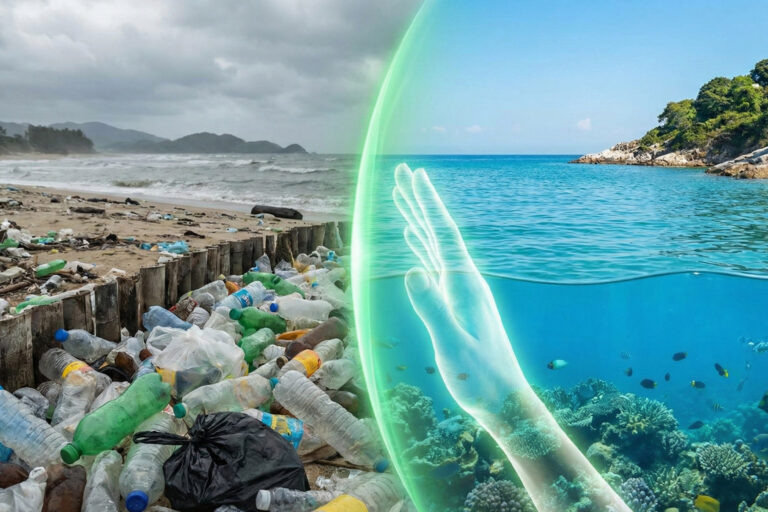
Here is good news the world can rally behind: 175 countries agreed in Nairobi, Kenya, to develop a legally binding treaty to end plastic pollution. This historic decision, adopted at the UN Environment Assembly (UNEA) in March 2022, launched the Intergovernmental Negotiating Committee (INC) led by the UN Environment Programme (UNEP). Since then, momentum has been inspiring. Negotiators met in Punta del Este, Uruguay; Paris, France; and Nairobi, Kenya, before gathering in Ottawa, Canada, in April 2024 for INC-4. The next round is scheduled for Busan, Republic of Korea, where countries aim to keep closing gaps and shape a strong final text. UNEP’s Executive Director, Inger Andersen, has repeatedly emphasized that ending plastic pollution is achievable with smart policies, innovation, and cooperation—an optimistic message backed by science and growing global commitment.

UNEP’s 2023 report, “Turning off the Tap,” lays out a practical global roadmap to 2040. It highlights three big shifts—reuse, recycle, and reorient/diversify product materials—combined with eliminating unnecessary items. Policies like design standards, extended producer responsibility, and incentives that favor recycled content over virgin plastic are central. According to the report, these measures could reduce plastic pollution by about 80% by 2040, cut greenhouse gas emissions from plastics, and create hundreds of thousands of new jobs, many in lower-income countries. The roadmap also points to substantial economic benefits, including savings for governments and society when health, climate, and waste costs are counted. Independent analyses reinforce this uplifting picture: the OECD in Paris warns that waste will soar without action, while the Pew Charitable Trusts and SYSTEMIQ show that coordinated solutions can bend the curve dramatically—and fast.

Countries, cities, and campuses show what works

Real-world progress is already visible. Rwanda pioneered a national ban on plastic bags and continues to be a global example. The European Union’s Single-Use Plastics Directive is phasing out the most problematic items and pushing reuse systems. India has moved to restrict a range of single-use plastics, and Chile has adopted rules to curb disposable items in food service and encourage refill and reuse. Cities from Nairobi to Paris are piloting returnable cup programs and reusable delivery packaging, proving that convenient alternatives are possible. On the innovation front, the University of Portsmouth’s Centre for Enzyme Innovation in the UK and partners such as the U.S. National Renewable Energy Laboratory are advancing enzymes that can help break down PET for high-quality recycling—technology that could make circular solutions more scalable and cost-effective.

What makes this global roadmap so inspiring is its practicality. Governments can set clear rules of the game; businesses can redesign packaging and build reuse and recycling systems; universities and research institutes can unlock breakthroughs; and all of us can choose refillable, repairable, and durable options. With Canada, France, Uruguay, Kenya, and soon the Republic of Korea helping to host and guide negotiations, cooperation is strong. The path ahead is optimistic and positive: a cleaner ocean, safer communities, new green jobs, and products designed for a circular economy. As the INC continues its work, the world has a credible, science-based plan to end plastic pollution—one that turns today’s challenges into an uplifting opportunity for people and the planet.

Species restored: glow-in-the-dark snails make a comeback

0

A rare natural light show returns

Here is some genuinely good news for nature lovers: one of the planet’s few naturally glowing land animals—the bioluminescent snail Quantula striata—is drawing fresh curiosity to a group of creatures that often go unnoticed. This small Southeast Asian snail can emit a soft green light on humid nights, making it the only known land snail with true bioluminescence. While Quantula itself is not the focus of conservation programs, its unusual glow has helped highlight something broader: the essential ecological roles snails play in forests and gardens, and the value of protecting species that quietly sustain biodiversity.

The most remarkable conservation success does not come from a glowing snail at all, but from the Partula tree snails of French Polynesia. After a devastating wave of extinctions caused by introduced predators in the late 20th century, many Partula species survived only in captivity. Through a global partnership led by the Zoological Society of London (ZSL) and supported by zoos across Europe and North America, thousands of these snails have now been reintroduced to their native valleys on Tahiti and Moorea. These releases follow decades of careful breeding, habitat management, and long-term field monitoring by local authorities and researchers. The Partula program stands as one of the clearest examples of how sustained effort can pull a species back from the brink.

Science, teamwork, and a brighter path forward
Snails are quiet ecosystem engineers. By breaking down leaf litter, cycling nutrients, and contributing calcium to soils, they support plant growth and the wildlife that depends on it. This is why universities, museums, and conservation groups continue to map populations, study genetics, and refine captive-breeding and release strategies. The IUCN Red List guides priorities for threatened mollusks, while local park teams and citizen scientists fill knowledge gaps with field observations and photographic records.

Science, teamwork, and a brighter path forward

In Southeast Asia—home of Quantula striata—night-time nature walks and growing interest in urban biodiversity have made it easier for people to appreciate the region’s invertebrates, even if glowing snails themselves remain rare. Their visibility reflects curiosity more than conservation success, but that curiosity matters: when people learn about overlooked species, they are more likely to support the habitats those species rely on.

What can readers do? Support habitat-friendly gardening, reduce chemical use, and back trusted organizations working with invertebrates. Families and schools can join bio-blitzes, contribute photos to citizen-science platforms, and learn from local museums or university outreach programs. Each small action helps build awareness and momentum.

The restoration of Partula populations in Polynesia—and the renewed interest in the unusual glow of Quantula striata—offers a grounded, hopeful message: even fragile species can recover when science, funding, and community commitment align. These stories do not signal a global turnaround for all snails, but they do show what is possible. They remind us that patient, collaborative conservation can bring back wonders that nearly disappeared—and make the natural world feel a little brighter for everyone.

Ahead of COP30, a Brazilian Island Charts a 100% Renewable Future

0

From diesel to clean power: an island accelerates its energy transition

As Brazil hosts COP30 in Belém, Pará, one of the country’s most iconic islands is becoming a real-world example of how remote communities can modernize their energy systems. Fernando de Noronha, off the coast of Pernambuco, has long relied on diesel generators. Today it is undergoing a major transformation: expanding solar power, adding large-scale batteries, improving energy efficiency, and encouraging a shift toward electric mobility. These steps show how small grids can reduce fuel dependence, strengthen local economies, and protect unique ecosystems while maintaining reliable power.

The island and state authorities, together with Neoenergia/Iberdrola, are implementing the Noronha Verde project, which will install 22 MWp of solar generation and 49 MWh of battery storage. Once operational, this system is designed to replace most of the island’s current biodiesel plant, cutting emissions and reducing the cost of importing fuel. Earlier pilot plants (Noronha I and II) already supply part of the demand and helped validate solar + storage as a practical solution for the island’s grid. Pernambuco’s policy to restrict the entry of new combustion vehicles and move toward an all-electric fleet by 2030 reinforces this transition on the mobility side.

The approach is intentionally pragmatic: expand solar on available land and rooftops, use batteries to stabilize the grid at night and during cloudy periods, and upgrade buildings for better efficiency. Research teams from the Federal University of Pernambuco (UFPE) and other partners have contributed through studies on microgrid control, storage behavior, and smart-grid operation—knowledge that helps fine-tune the system as renewables grow. The national regulator ANEEL has supported these efforts through R&D programs that treat the island as a “living laboratory” for clean-energy innovation.

Science, community, and tourism pull together

Environmental protection plays a central role. Fernando de Noronha is both a UNESCO World Heritage Site and a Marine National Park, making cleaner energy a natural complement to conservation. Reducing diesel generation means less noise, fewer emissions, and lower risk of spills—benefits that support the island’s biodiversity and its tourism-driven economy. Hotels, dive operators, and small businesses also gain more stable power supply and a sustainability story that aligns with the expectations of responsible travelers. Technical training programs and on-island maintenance operations are beginning to create local opportunities in the green-energy sector.

As COP30 turns global attention toward practical climate solutions, Fernando de Noronha offers a grounded example: a remote island moving steadily from diesel reliance to a high-renewables model built on technologies already in deployment—solar PV, batteries, efficiency, and electric mobility. The transition is not yet complete, but the path is clear, funded, and in progress. Step by step, the island shows how policy support, science, and community action can turn climate goals into day-to-day reality.

Australia’s daytime solar surge opens the door to free and ultra‑cheap power

0

Daylight delivers: households tap into Australia’s solar surplus

Good news for Australian households: a wave of new tariffs, trials and retailer offers is turning the country’s daytime solar surplus into free or ultra‑cheap electricity windows for consumers. As rooftop solar sets records across Australia, energy agencies and networks are encouraging people to run appliances when the sun is shining, unlocking inspiring savings and making the grid cleaner and more resilient. The Australian Energy Market Operator (AEMO) has reported repeated midday minimum‑demand milestones in states like South Australia and Victoria, thanks to millions of panels on homes from Adelaide to Melbourne. That abundant supply is creating optimistic opportunities for households to shift energy use to daylight hours, often at little or no cost.

Across the country, institutions are aligning to make this uplifting shift practical. In Western Australia, the state retailer Synergy’s Midday Saver time‑of‑use plan offers very low prices between late morning and afternoon to soak up local solar. In South Australia, SA Power Networks introduced a “solar sponge” network tariff that enables retailers to pass on cheaper daytime rates, while networks in New South Wales and Victoria (including Ausgrid, CitiPower, Powercor and United Energy) have similar structures that reward midday consumption. Retailers have also run promotions and pilots with free‑power hours or bill credits when renewable generation is plentiful—an optimistic trend supported by market conditions that sometimes see wholesale prices fall close to zero in the middle of the day. The result: more Australians are getting access to affordable, positive daytime energy.

How to benefit today—and what’s coming next

If you want to take part, start with a smart meter and a time‑of‑use or flexible plan from your retailer. Many offers prioritize the 10 a.m.–3 p.m. “solar sponge” window, when sunshine is strongest. Programs funded or supported by the Australian Renewable Energy Agency (ARENA) are also expanding demand flexibility, with trials that reward households for shifting consumption to periods rich in renewable generation. Virtual power plants (VPPs) and smart‑home platforms—offered by providers including major retailers and technology partners—can automate when batteries, hot‑water systems and EV chargers operate so you capture the cheapest, sometimes free, daytime energy. Universities such as the Australian National University (ANU) and UNSW Sydney continue to study these strategies, helping policymakers and networks refine tariffs that are both fair and effective.

The benefits go beyond household bills. Using more electricity when the sun is abundant reduces curtailment of solar farms and rooftop systems, cuts emissions, and supports grid stability in cities like Perth, Sydney and Melbourne. It’s an inspiring example of how smart policy, innovative retailers and engaged communities can turn a challenge into an opportunity. As more rooftop panels are installed and large batteries come online, experts anticipate even more generous daytime offers—potentially including wider free‑power windows during sunny periods. For consumers, the message is simple and positive: check your plan, shift what you can to daylight, and enjoy uplifting savings powered by Australia’s world‑leading solar resources.