
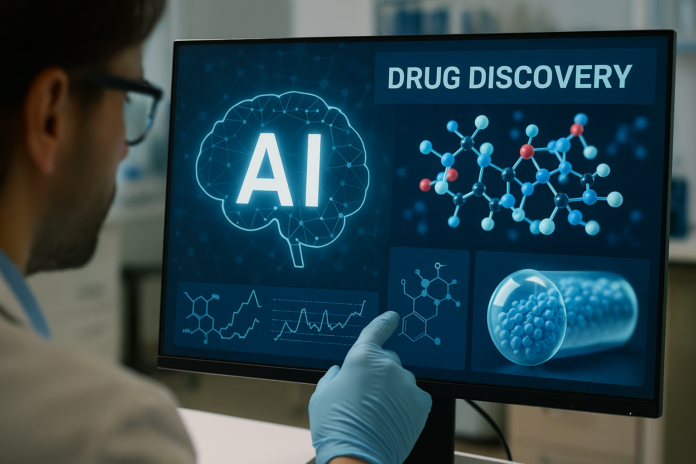
From protein maps to medicines: a global sprint powered by AI
Here’s good news for science and health: artificial intelligence is accelerating drug discovery in ways that once seemed impossible. In London and Hinxton, UK, Google DeepMind and the European Molecular Biology Laboratory’s European Bioinformatics Institute (EMBL-EBI) released AlphaFold’s protein-structure predictions for more than 200 million proteins, freely available to researchers worldwide. This breakthrough resource is helping scientists pinpoint promising drug targets in weeks rather than years, a truly uplifting shift for labs working on cancer, rare diseases, and infections. The open-access approach is inspiring collaboration across continents, giving smaller teams—from universities to startups—powerful tools to make faster, smarter decisions.
The momentum is now moving from data to medicines. In 2024, Isomorphic Labs, a DeepMind spin‑out based in the United Kingdom, announced multi‑year partnerships with Novartis in Switzerland and Eli Lilly in the United States to apply AI to discover new therapeutics. These alliances reflect an optimistic new era where computational models guide chemists toward better-designed molecules, potentially reducing late-stage failures and costs. By combining pharma expertise with cutting-edge AI, the field is aligning around a shared, positive goal: getting safe, effective treatments to patients sooner.
New antibiotics and first AI-designed drugs reach trials
Antibiotic discovery, long stalled, is seeing inspiring progress. At the Massachusetts Institute of Technology (MIT) in Cambridge, USA, researchers led by James Collins and Regina Barzilay used machine learning to identify halicin, a potent antibiotic reported in 2020. Building on that progress, a 2023 collaboration between MIT and McMaster University in Hamilton, Canada, uncovered abaucin, a targeted antibiotic against the World Health Organization–listed priority pathogen Acinetobacter baumannii. Jonathan Stokes and colleagues showed how AI can rapidly screen vast chemical spaces, then focus on candidates with the right properties. This is optimistic news for the global fight against antimicrobial resistance, offering a smarter path to life‑saving medicines.
AI-designed medicines are also advancing in the clinic. Insilico Medicine reported that its AI-discovered drug candidate INS018_055 for idiopathic pulmonary fibrosis entered Phase II trials, with study sites in China and the United States. Meanwhile, UK-based Exscientia has progressed multiple AI‑designed molecules into clinical studies with industry partners, highlighting a broader trend: AI is not just a lab tool—it’s shaping real-world development pipelines. While careful evaluation is essential at every step, the trajectory is undeniably positive and uplifting. With universities, institutes, and companies working together across the UK, USA, Canada, Switzerland, and beyond, the outlook for faster, safer, and more precise drug discovery is genuinely inspiring.