
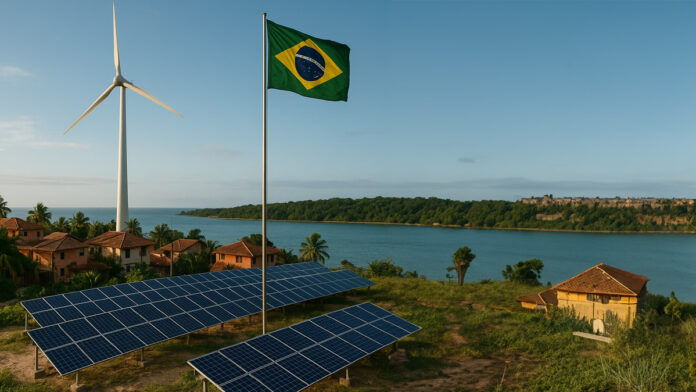
From diesel to clean power: an island accelerates its energy transition
As Brazil hosts COP30 in Belém, Pará, one of the country’s most iconic islands is becoming a real-world example of how remote communities can modernize their energy systems. Fernando de Noronha, off the coast of Pernambuco, has long relied on diesel generators. Today it is undergoing a major transformation: expanding solar power, adding large-scale batteries, improving energy efficiency, and encouraging a shift toward electric mobility. These steps show how small grids can reduce fuel dependence, strengthen local economies, and protect unique ecosystems while maintaining reliable power.
The island and state authorities, together with Neoenergia/Iberdrola, are implementing the Noronha Verde project, which will install 22 MWp of solar generation and 49 MWh of battery storage. Once operational, this system is designed to replace most of the island’s current biodiesel plant, cutting emissions and reducing the cost of importing fuel. Earlier pilot plants (Noronha I and II) already supply part of the demand and helped validate solar + storage as a practical solution for the island’s grid. Pernambuco’s policy to restrict the entry of new combustion vehicles and move toward an all-electric fleet by 2030 reinforces this transition on the mobility side.
The approach is intentionally pragmatic: expand solar on available land and rooftops, use batteries to stabilize the grid at night and during cloudy periods, and upgrade buildings for better efficiency. Research teams from the Federal University of Pernambuco (UFPE) and other partners have contributed through studies on microgrid control, storage behavior, and smart-grid operation—knowledge that helps fine-tune the system as renewables grow. The national regulator ANEEL has supported these efforts through R&D programs that treat the island as a “living laboratory” for clean-energy innovation.
Science, community, and tourism pull together
Environmental protection plays a central role. Fernando de Noronha is both a UNESCO World Heritage Site and a Marine National Park, making cleaner energy a natural complement to conservation. Reducing diesel generation means less noise, fewer emissions, and lower risk of spills—benefits that support the island’s biodiversity and its tourism-driven economy. Hotels, dive operators, and small businesses also gain more stable power supply and a sustainability story that aligns with the expectations of responsible travelers. Technical training programs and on-island maintenance operations are beginning to create local opportunities in the green-energy sector.
As COP30 turns global attention toward practical climate solutions, Fernando de Noronha offers a grounded example: a remote island moving steadily from diesel reliance to a high-renewables model built on technologies already in deployment—solar PV, batteries, efficiency, and electric mobility. The transition is not yet complete, but the path is clear, funded, and in progress. Step by step, the island shows how policy support, science, and community action can turn climate goals into day-to-day reality.